

The Story of the Book
Alan H. McGowan first learned of “Papa Franz,” as Boas’ women students affectionately called him, from Margaret Mead, who chaired the board of the Scientists’ Institute for Public Information, an organization he led. His interest in the concept of racial superiority led him back to Boas, a central figure in discussions on race.
Exploring Boas' Impact
In his quest to explore these issues, Alan wrote several articles on Boas, which were featured in both peer-reviewed journals and popular outlets. He soon realized the profound impact Boas had not only on racial issues but on the politics of his time as well.
The Making of a Unique Book
While many books have been written about Franz Boas, none adequately interwove his active political career with his groundbreaking work in anthropology. Alan decided to take on the challenge. After fifteen years of diligent research and writing, his book finally came to fruition.
Research Endeavors
The American Philosophical Society in Philadelphia houses the most extensive collection of Boas’ letters, spanning 74 linear feet. Boas, known for his prolific correspondence, wrote at least three or four letters daily throughout his long life. Alan took inspiration from Robert Caro’s famous phrase, “Turn Every Page,” and devoted himself to reviewing each letter to uncover the essence of Boas’ thoughts and actions. The meticulous process contributed significantly to the time taken to complete the book.
Douglas Cole, an early biographer of Boas, also had an extensive collection housed in the BC Archives in Victoria, Canada. Alan spent many weeks in Victoria, delving into this collection and gaining valuable insights. The American Museum of Natural History added further depth to his research, providing a treasure trove of photographs of and by Boas, many of which are featured in the book.
Collaborating with Talented Researchers
During this journey, Alan was fortunate to hire three exceptional former students from The New School: Josef Soloff, Christi Byrd, and Micah Campbell-Smith. Their extraordinary research and writing significantly contributed to the book’s success. Appreciating their talents, Alan collaborated with them on a new project, “Life and Death in the Anthropocene,” where they will share co-authorship.
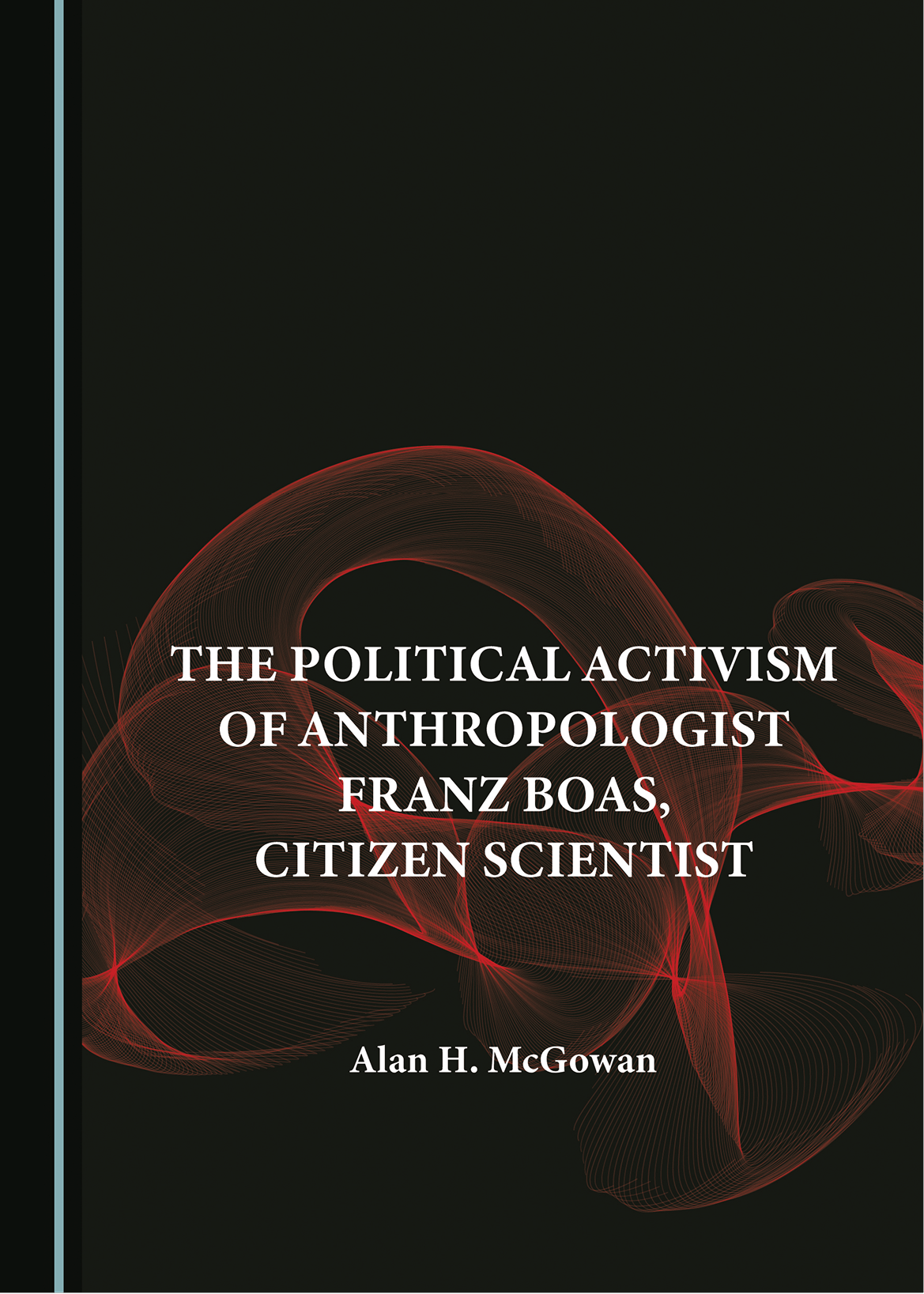
The Political Activism of Anthropologist Franz Boas, Citizen Scientist by Alan H. McGowan
Meticulously Researched, Dense, and Fascinating
Alan H. McGowan’s latest work presents a compelling and insightful exploration of the life and legacy of Franz Boas, a pioneering figure in anthropology. This book delves into Boas’ dual identity as both a scientist and a political activist, shedding light on how his work transcended academic boundaries to make a lasting impact on society.
McGowan provides a comprehensive overview of Boas’ career, covering his groundbreaking research on cultural relativism as well as his advocacy for social justice and racial equality. By drawing on a wealth of primary sources and historical documents, McGowan paints a vivid portrait of Boas as a multifaceted figure whose work was deeply intertwined with his political beliefs.
The book uncovers the intricate connection between Boas’ scientific endeavors and his political beliefs. McGowan illuminates how Boas utilized his platform as an anthropologist to challenge societal norms and advocate for marginalized groups. Furthermore, the book offers valuable insights into the broader implications of Boas’ legacy.
Emphasizing Boas’ commitment to antiracism, cultural relativism, and social justice, McGowan underscores the enduring relevance of Boas’ ideas in contemporary discussions on race, identity, and inequality. McGowan’s insightful analysis and engaging narrative style make this book a valuable resource for scholars, students, and anyone interested in the intersection of science, politics, and social change.
This thought-provoking and thoroughly researched work offers a nuanced understanding of Boas’ legacy and its lasting significance.